
Vegetarianism
#Throwback—Stella Natura Calendar 2023

The intention of this piece is to examine the question of the consumption of meat and harvest of animals for human consumption. What light can anthroposophy, “the path for human beings to find their humanity,” offer?
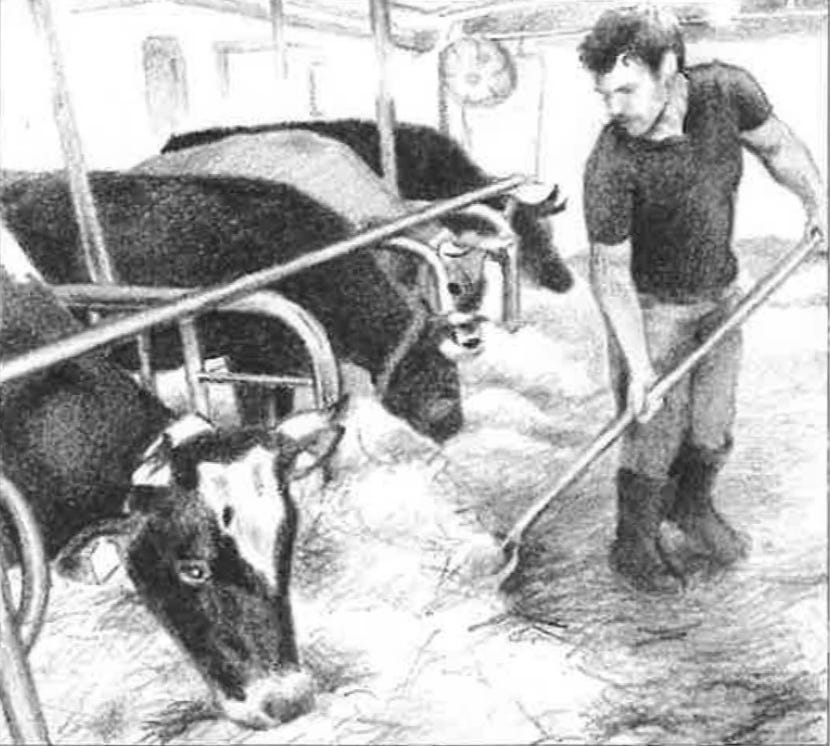
On the one hand, Rudolf Steiner frequently touted the spiritual benefits of vegetarianism, and on the other, he instigated a new approach to agriculture, now called Biodynamics, which involves the slaughter of animals. Why have many anthroposophists chosen a vegetarian diet? And, why have most biodynamic farmers chosen to eat, raise, and market meat?
In Lecture 8 of Steiner’s Agriculture Course, we find a key example of the paradox: “The real advantage of the vegetarian mode of life is that it makes us stronger because we draw forth from the organism forces which would otherwise be lying fallow there... If we only eat plant food, these forces are called into activity to lift the plant up to human nature. If, on the other hand, we eat animal food from the outset, these forces are left latent in the organism... Now let us come to the question, how should we fatten animals?... Oh, the pigs, the fat pigs and sows—what heavenly creatures they are!” Here Rudolf Steiner espouses the advantage of a vegetarian mode of life and in the next paragraph goes on to explain how to fatten a pig!
How are we to respond? Lest we overlook, Steiner actually begins the whole statement with: “Thus there are two sides to every question, and we must realize how all these things are individualized. We cannot give hard and fast principles.”
Karl König elaborates on Steiner’s statement above: “If we eat plant food, we have to carry out the transformation from the vegetable to the animal, and then from the animal to the human; we go through a double sequence of stages, and in so doing we employ forces which otherwise remain dormant.” Are König and Steiner pointing to some easy access to spiritual development? Hardly. Rudolf Steiner once told a friend: “If I put on a magician’s cloak and asked people to perform the craziest exercise, like running up some mountain at midnight to do something nonsensical, believe me, they would all do it! Everyone would be chasing after me. But to spend years of effort to overcome and set aside perhaps just one character weakness or bad habit—that’s just not interesting, is it? People simply don’t believe that a single change in their own character—such as a vain person admitting his vanity and becoming ashamed of it—could possibly have more impact on their spiritual progress than listening to hundreds of lectures or committing all of my lecture cycles to memory [...].”(1)
König continues, “It would, however, be misguided to eat only plants just because this utilizes more forces. There should be no sectarianism in nutrition, no single valid point of view. We need to cultivate insight so that we gradually learn to discern whether we have sufficient forces available to be able to take in plant nourishment and to digest it consistently, or whether we are so tired and weakened that we don’t have the necessary forces at our disposal to digest vegetable food.”
This discernment must be honored as an individually held choice. As an aid to our discernment, we must face the fact of the degeneration of humanity since leaving traditional diets behind. Industrialized consciousness has created broken soils, de-cultured plants, and suffering animals. Weston A. Price and Sally Fallon Morell have documented the consequences of leaving traditional diets behind. Every healthy traditional culture Weston A. Price encountered consumed animal foods, and those who didn’t regularly have access to them showed the effects of decay and degeneration.
Yet anthroposophy indicates that traditional wisdom is in a process of decline, and will not serve as the path forward for human society. Traditional diets can help serve as a model to start with, but the task is to attune the diet for the individual. Ultimately, there are as many ideal diets as there are human beings on the earth. For a choice to be taken freely it must emanate from the inner depths rather than from an outside influence, including the teachings of Rudolf Steiner!
Now to the question of the morality of harvesting animals. Steiner never conceptualized a healthy farm without the harvesting of animals. The preparations to be added to the compost, which are central to the biodynamic work, involve the harvesting of the animals to use various parts as sheaths. The anthroposophic farm brings human, animal, plant, and mineral realms into dynamic relationship. Life and death are one of the most important dynamics to work with in the present age.
Here I will explicitly cite and respond to some of the specific points that have been raised from vegetarians.
The livestock’s natural life is cut short long before its normal life span is completed. Natural life? If your elderly goat had anything close to a “natural life” it would be torn apart by coyotes. When livestock are domesticated, the human takes on the role as overseer of the natural order. In nature, the vast majority of animals die young. The farm follows the same natural order of population control by harvesting young and/or lesser animals for consumption. In animal husbandry every bull calf that is lesser than the supreme bull is harvested, and when a heifer starts looking better than a cow, the cow is replaced. Farmers see the potential in the herd and pull it out into manifestation through observation and action.
Humane meat production, in the end, is rooted in the betrayal of a trusting and vulnerable friend. As a farmer, I only eat my friends. From birth through slaughter and consumption, good farmers love their animals, and hold them as sacred. What is consumption but an opportunity for communion? Orland Bishop has said that sacrifice means to make sacred. The act of harvest, when done in a sacred manner, is an act consecrated in love. It is an act that speaks so intimately to the role of the human being on this earth as steward. Remorse over the killing of an animal is more a result of a fractured culture that is afraid of death. Placing death-phobia within a spiritual movement that refers to those that have crossed the threshold as, “the so-called dead,” is a head-scratcher. The dead are in fact with us. They have never left. Lives appear to be taken from a viewpoint centered only on what physical sensory perception between birth and death can behold.
It is feasible that the animals can be retained for their necessary manure and permitted to live out the entirety of their lives on the farm. Who conducted that feasibility study? Where do all the excess animals go? Eventually, given the size of the land holding, and assuming animals are bred back frequently, the land will become quickly overcrowded. In this picture, there can no longer be birth because of the inability to face death. Without death there is no life.
Abstraction is certainly at the heart of this issue of vegetarianism and the sacred tending of the animals. Farmers tend their animals for generations, through birth and death. The future impulses of sacred tending of animals will not come from an armchair, but instead from those most intimate with the animals themselves, the farmers.
Adelheid Petersen, Reminiscences of Rudolf Steiner. König, Nutrition from Earth and Cosmos, Floris Books (2015)